Showing posts with label beetles. Show all posts

Monday, 31 August 2015

Wild Winkworth, August 2015

There's something about the middle to end of August that I can never quite put my finger on but I absolutely love. The misty, dewy mornings, the golden sunlight, the subtle scent of ripening fruit - it all adds up to the unmistakeable and wholly wonderful feeling of early Autumn. I know Autumn is a dirty word to some people, bringing with it as it does images of endless grey and drizzly days, soggy leaves and the long winter to come, but I just love the change, the feeling of an endless cycle, things taking place in their natural order, season following season, unfettered by our daily goings-on. Winkworth is a great place to observe these changes, as each day brings new things to see as wildlife prepares for the season ahead and - whisper it - the leaves begin to turn. Yes, any of you who have visited the arboretum recently will have noticed there's already a fair few reds, golds and yellows beginning to pop up amongst the greens - particularly amongst some of the Acers. Liquidambars and those strikingly red Cercidiphyllum japonicums in Rowe's Flashe Meadow.
It's not just the leaves that are changing colour; there are also some brightly coloured berries ripening up around the arboretum. Look up on Sorbus Hill and you'll see the colourful sprays of the various Sorbus berries, while amongst the nettles and leafy undergrowth beneath the trees you may spot the bright red-orange spikes of Arum maculatum.
 I mentioned in my last blog post about the birds beginning to move and that has stepped up a pace in the past few weeks. The Swifts have now all but gone; I saw one locally on the 22nd but haven't seen one over the arboretum itself since the 10th. Swallows are now on the move too with some fairly steady southerly movements noted recently. There have also been some sizeable congregations of House Martins - on the 18th at least 40-50 were over Sorbus Hill. The large flocks of Chiffchaffs and other small birds around Rowe's Flashe Lake seem to be getting bigger every day and attracting all sorts of species into their ranks, including several Willow Warblers and the odd Garden Warbler and Whitethroat. On the morning of the 23rd I noted Firecrest, a singing Willow Warbler and several Marsh Tits flitting about in the trees by the boathouse. Talking about the boathouse, and moving away from birds for a moment, I got a bit of surprise when I opened the boathouse on the 2nd and checked the 'Plant of the moment' samples only to find this Old Lady moth on one of the Cotinus clippings!  


The predominant raptor species this month have been Sparrowhawk and Buzzard, both having evidently bred locally as there have been very vocal juveniles of both species in the arboretum recently. A family group of Sparrowhawks made their presence known in the Phillimore Wetlands for most of the middle of the month, while a family of Buzzards have been similarly vocal towards the southern end of Rowe's Flashe Lake. Some days it's seemed almost as if the two sets of juveniles have been playing a game of 'who can whine the loudest', the sound of their cries echoing around the arboretum. Early on the 12th there were eight Buzzards soaring over The Bowl - the highest number I have seen together here to date. While having my lunch on the 30th I caught a brief glimpse of what I judged to be a Goshawk flying north-east low over the upper arboretum. I alerted my friend Ed who I knew was birding on the other side of the valley from Winkworth at the time and he was able to locate the bird in question and confirm its identity. A first record for the arboretum as far as I can tell!
Five of the eight Buzzards soaring over The Bowl on the 12th

On Rowe's Flashe Lake it's been a rather quiet few weeks. On the 11th a female Mute Swan was present for a couple of hours before flying off north - amazingly only my second record here this year - while on the 18th a female Pochard made a brief appearance. By the middle of the month the remaining three Canada Goose youngsters had mysteriously disappeared, and the last I saw of the two adult birds was on the 19th. Kingfishers were seen on heard several times throughout the month, including a juvenile on the 19th. Grey Wagtails are a common enough sight around the lake and spillways but a congregation of six together on the 28th was an unusually high count - presumably the family group that recently vacated the wall of the boathouse. There are still a few Little Grebes and Mandarin Ducks to be seen as well.
Mute Swan on Rowe's Flashe Lake

Other bird highlights in August have included the return of Water Rails to Phillimore Wetlands, with one announcing its presence with its unmistakeable squealing on the 7th. I've heard it regularly since, and on the 13th there were certainly at least two calling in the Gunnera Swamp area. Flyovers have included Hobby (24th) and Raven (29th). Also on the 29th it was good to come across a Spotted Flycatcher flitting around the trees in the north-western corner of the arboretum, roughly between the overflow car park and the viewing platform; the first one I've seen here since the one that hung around for a while in June, so this is likely a bird stopping off on its way from its breeding area back to its wintering grounds in the tropics of Africa. It may not have come all that far though, as I have recently seen a couple of family groups along the neighbouring Thorncombe Street.
I unfortunately didn't have my camera handy to photograph the Flycatcher, so instead here's a juvenile Song Thrush I photographed on Sorbus Hill on the 11th.

On to butterflies now, and it's been rather quiet on that front just lately, partly due to the wet weather in the past week or so but also as some species are coming to the end of their flight season. There's still beeen a few around though, especially worthy of note is this Painted Lady I photographed sunning itself along the Spring Walk on the 22nd.
On the 17th we stumbled across this striking individual in our yard. It's a Buff-tip moth caterpillar. If you haven't ever seen a Buff-tip moth then look it up - they are amazingly camouflaged to look like a bit of broken twig!
With the damper weather recently there's been some cracking fungi popping up around the arboretum like this Chicken of the Woods along the Spring Walk.
There are also Parasol mushrooms in Rowe's Flashe Meadow...
 ...and this lovely Shaggy Inkcap halfway along the dam.
Whilst we were driving past the Winter Garden on the 14th fellow gardener Giles spotted this little Wood Mouse running around. I was amazed how close it let me get - I took this picture on my phone camera with very little zoom! I think it thought if it stayed still I wouldn't see it.

I unfortunately wasn't able to attend the bat walk on the 15th but I'm told it was well attended and several bats were seen and heard on the bat detectors, including Common and Soprano Pipistrelles, Noctule, and Daubentons, the latter seen skimming low over Rowe's Flashe Lake catching insects.
There have been loads of dragonflies around lately, with Southern Hawker and Brown Hawker being the most numerous and conspicuous, although I've also noted the odd Migrant Hawker darting around higher up in the tree canopy.
On the 28th, Grass Snakes and Slow-worms were seen basking on paths in the warm morning sunshine, although sadly neither was obliging enough to hang around for a photo!
Finally, to finish this rather eclectic blog post, a Tanner Beetle! This large beetle species - one of the largest found in the UK - is classified as nationally scarce, so needless to say I was rather surprised to stumble across this one while sweeping out the gardeners' workshop on the 30th. 
Tanner Beetle - what a beast!

*


Monday, 1 June 2015

Wild Winkworth, late May 2015

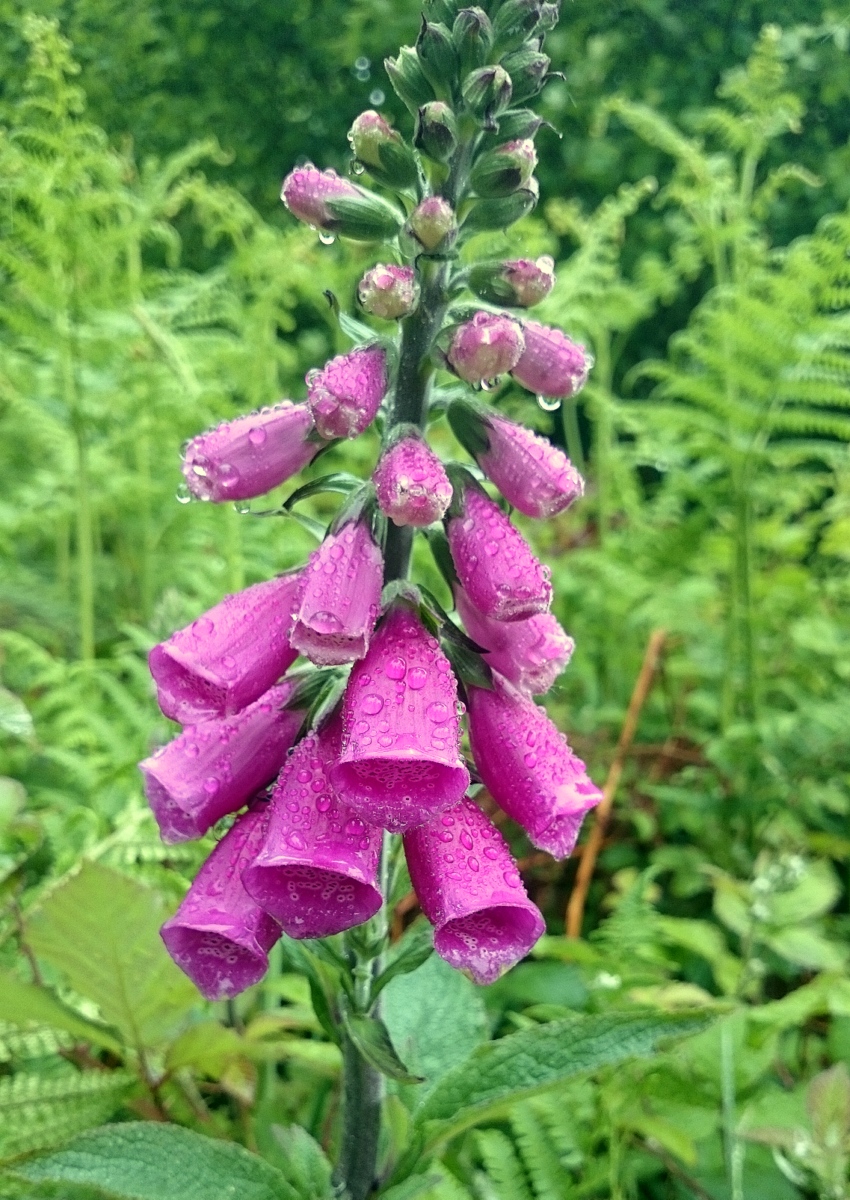
A slightly longer gap between blog posts than usual as I’ve been away for a week on the Outer Hebrides. It was rather chilly up there, as you might imagine, but I gather it’s not exactly been tropical down here in Surrey either! Nonetheless, the arboretum is looking wonderful at the moment, the many vibrant and fresh greens providing the perfect backdrop for the multitude of flowers on the trees and shrubs. The wild flowers too are starting to put on a great show, from the delicate pinks and blues of Vetches and Speedwells to the bright yellows of Irises and Meadow Buttercups and the striking white of Ox-eye Daisies. The Bluebells may be all but over but in the more wooded areas of the arboretum the first Foxgloves are beginning to flower.
There is much new life to be found in the bird population in the arboretum too, Rowe’s Flashe Lake is now teeming with young Mallards, as well as several Canada goslings and a few Mandarin ducklings. This female Mandarin was vigilantly guarding her young on the edge of the meadow on the 30th. 
Meanwhile Coots and Little Grebes are still on nests towards the southern end of the lake, while Moorhens are nesting right in front of the boathouse balcony, the eggs clearly visible when the adult bird vacates its position.
There are currently at least three active Great Spotted Woodpecker nests around the arboretum – in Bluebell Wood, at the top of the Spring Walk near the Viewing Platform, and by the path that runs between Holly Wood and Magnolia Wood. The latter is the easiest one to find because of its proximity to the path, and on the 26th I captured this brief bit of footage of the female bird bringing food to the noisy nestlings...
Jackdaws, too, are nesting all over the place, with clearly well-grown nestlings calling from various trees holes in Bluebell Wood. Meanwhile, on the slopes below the Owl Bench there are various Blackcap and Chiffchaff nests in the bracken and brambles.
In addition to the ducklings and goslings on the lake, I have started seeing juvenile Robins and Blackbirds around recently, as well as several family groups of Long-tailed Tits. On the morning of the 31st, I stumbled across a female Mallard on the gabions at Rowe’s Flashe Lake with all her ducklings taking shelter from the rain underneath her.
Other highlights from the past couple of weeks have included the first Hobby of the year, over Rowe's Flashe Lake briefly on the 26th and the first dragonfly I've seen here this year, an Emperor, hawking about over the slopes of Sorbus Hill on the 30th.
Another striking insect to look out for is the Scorpion Fly (Panorpa sp.) - there are plenty of them around at the moment, like this one I photographed out on Sorbus Hill on the 30th.
While out strimming and blowing paths with volunteers on the 26th I filmed this Tiger Cranefly (Nephrotoma sp.) ovipositing (egg-laying). I thought it looked a bit like it was on a pogo stick!     
Finally on the 'cool bugs' list for this blog post is the Violet Ground Beetle (Carabus violaceus) I spotted in the Badger's Bowl on the 30th. A common enough species but always nice to see.

*

Thursday, 14 May 2015

Baby boom, beetles and butterflies - early May at Winkworth

Lots to talk about again from the past couple of weeks. It's been a mixed bag on the weather front, with some good spells of sunshine mixed in with showers and more prolonged spells of rain, frost and some high winds which led to the arboretum closing early on 5th May. Nonetheless, the place is looking incredible - so much colour, scent and new life. The shift to south/south-westerly winds during the first week of the month brought with it more new migrants and by the 6th there were at least four singing Garden Warblers around the arboretum - this one showing (and singing) very well by Rowe's Flashe Lake.
We now have at least one pair of Cuckoos on site, both seen well together by the garden team on the edge of the Phillimore Wetland on the 13th, although I am certain there have been two singing males around. The senior gardener captured this video clip of one singing right by the main gate early on the 10th.
On the subject of singing, the dawn chorus walk on the 3rd produced a total of thirty-eight species - not bad given the rather miserable conditions, although Jonnie's engaging leadership and Tina's fried breakfast made for a very enjoyable morning despite the weather!

Up above the arboretum, meanwhile, the first Swift of the year was noted flying east on the 5th, while Sorbus Hill is proving to be the best spot to see House Martins with at least eight hawking around low over the trees on the 11th. Swallows remain a common sight flitting low over Rowe's Flashe Lake.

Talking of Rowe's Flashe, that brings me on to the babies mentioned in the blog title...

The second week of the month saw a burst of new life, with at least twenty-three Mallard ducklings present on the 11th, including this family group on the meadow side of the lake.

The female Little Grebe is still on the nest towards the southern end of the lake, although she vacated her position just long enough on the 11th for me to catch a glimpse of at least one chick.
 Meanwhile, on the 12th there were five Mandarin ducklings to add to the list (sadly I wasn't able to get a photo), along with our first Canada goslings of the season. In the trees along the dam there was also a family party of Long-tailed Tits. Other birds I've noted clearly gathering food for nestlings include Robin, Coal Tit and Blackbird, while there are at least three active Jackdaw nests around the arboretum now - listen carefully down in Bluebell Wood and you may hear the muted squawking of the young emanating from one of the Oaks. 
Roe Deer remain a common sight around the arboretum, most frequently seen along the Spring Walk or in Bluebell Wood, while on the 11th a regular visitor told me she had seen a Stoat with young in Rowe's Flashe Meadow. 
   While erecting a fence in the upper arboretum this past week the garden team encountered two very striking beetles. Firstly, this Green Tiger Beetle (Cicindela campestris)...
followed by the Black-headed Cardinal Beetle (Pyrochroa coccinea)
Some warmer spells towards the middle of the month have seen more butterflies taking to the wing in the arboretum. Species seen so far in May have been Holly Blue, Orange-tip, Large White, Small White, Green-veined White, Peacock and Speckled Wood (pictured below).

As a final point, if you're interested in reading a short piece about the arboretum I penned for local magazine, The Bridge, you can find it here.

*