Showing posts with label moths. Show all posts

Saturday, 26 March 2016

Winkworth springs to life


Well, lots to talk about since my last blog post, even though it's only been a couple of weeks. It's been a mixed bag on the weather side of things, with an extended spell of north-easterly winds giving a couple of weeks of largely dry, often fine but chilly weather. Now the winds are back in the south/south-west and after the warmest day of the year so far on Good Friday we're now back to rather damp and unsettled for the Easter weekend. Still, there are signs of new life bursting forth all over the arboretum now.
As happened this time last year the north-easterly winds have rather held back some of the spring migrant birds, but this past week or so the first Chiffchaffs have begun returning, and just this morning I noted at least five around the arboretum, some occasionally singing their eponymous song, despite the foul weather. 
Chiffchaff - Ann Jacobs
Another bird we tend to see more of at this time of year, Pochards have been present throughout the month on Rowe's Flashe Lake, and in varying numbers, peaking at five on the 8th and the 10th. Volunteer Ann Jacobs captured these great pictures of one of the drakes, including one of him in mid-dive!
Pochard - Ann Jacobs
Also making more regular appearances at Rowe's Flashe recently have been a couple of Kingfishers, which Ann again managed to photograph on the 22nd.
Kingfishers - Ann Jacobs
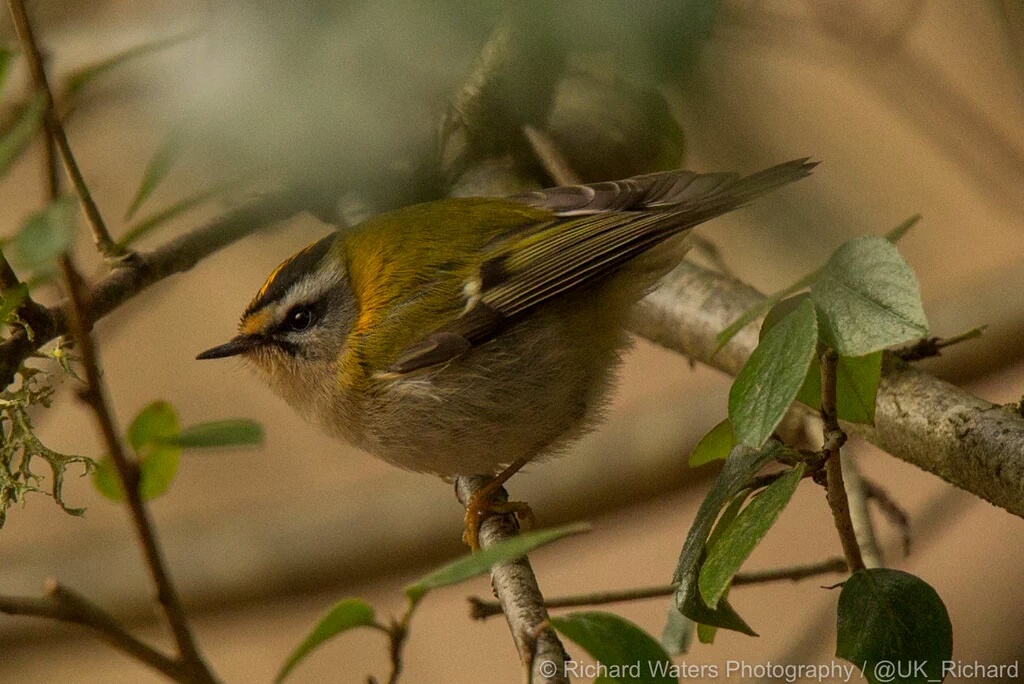
The other star bird which has been receiving a fair amount of photographic attention is the Firecrest that's been seen on and off near the boathouse. Both John Rowland and Richard Waters managed to get some lovely shots.
Firecrest - Richard Waters
Firecrest - John Rowland
Water Rails are being heard more regularly again in the Phillimore Wetland, and there were definitely two present on the 8th and the 13th. We now appear to have a regular pair of Red-legged Partridge hanging around which I've seen near the boathouse or in a Bluebell Wood a few times recently. Makes a change from the ubiquitous Pheasants!
Red-legged Partridge - Matt Phelps
If you've walked through the upper arboretum in the past week or two you may have noticed a lot of birds flying up from the ground around you. These are the gathering Redwings feeding up and preparing to head back to Scandinavia and Russia for the breeding season. On sunnier days they have been particularly chattery, even singing occasionally. 
While migrant birds are busying themselves arriving and departing, many of our resident species are already getting into the business of nest building and breeding. I stumbled across this Long-tailed Tit nest the other day. Such incredible engineering to build something like this out of moss and lichen!
Long-tailed Tit nest - Matt Phelps
On Good Friday there appeared to be some raptor migration going on, with at least 4-5 Buzzards flying purposefully north, a Red Kite south and a female Goshawk moving powerfully north/north-west which Ed Stubbs later picked up at considerable height over Allden's Hill just to the north of the arboretum. There have been occasional sightings of Sparrowhawk and Kestrel, while single Peregrines were seen on the 13th and the 22nd.
Buzzard - Ann Jacobs
The sunshine in the past week or two has been enough to coax out the first of the hibernating butterflies. On the 13th I saw a Peacock, while on the 17th I saw my first Brimstone and Small Tortoiseshell of the year. The most remarkable lepidopteran moment recently though was the Humming-bird Hawk-moth I stumbled across nectaring on Daffodils near the Winter Garden on the 13th. I had only ever previously seen this species in mid to late summer as it tends to migrate up from the continent. I can only assume this individual had hibernated nearby. 
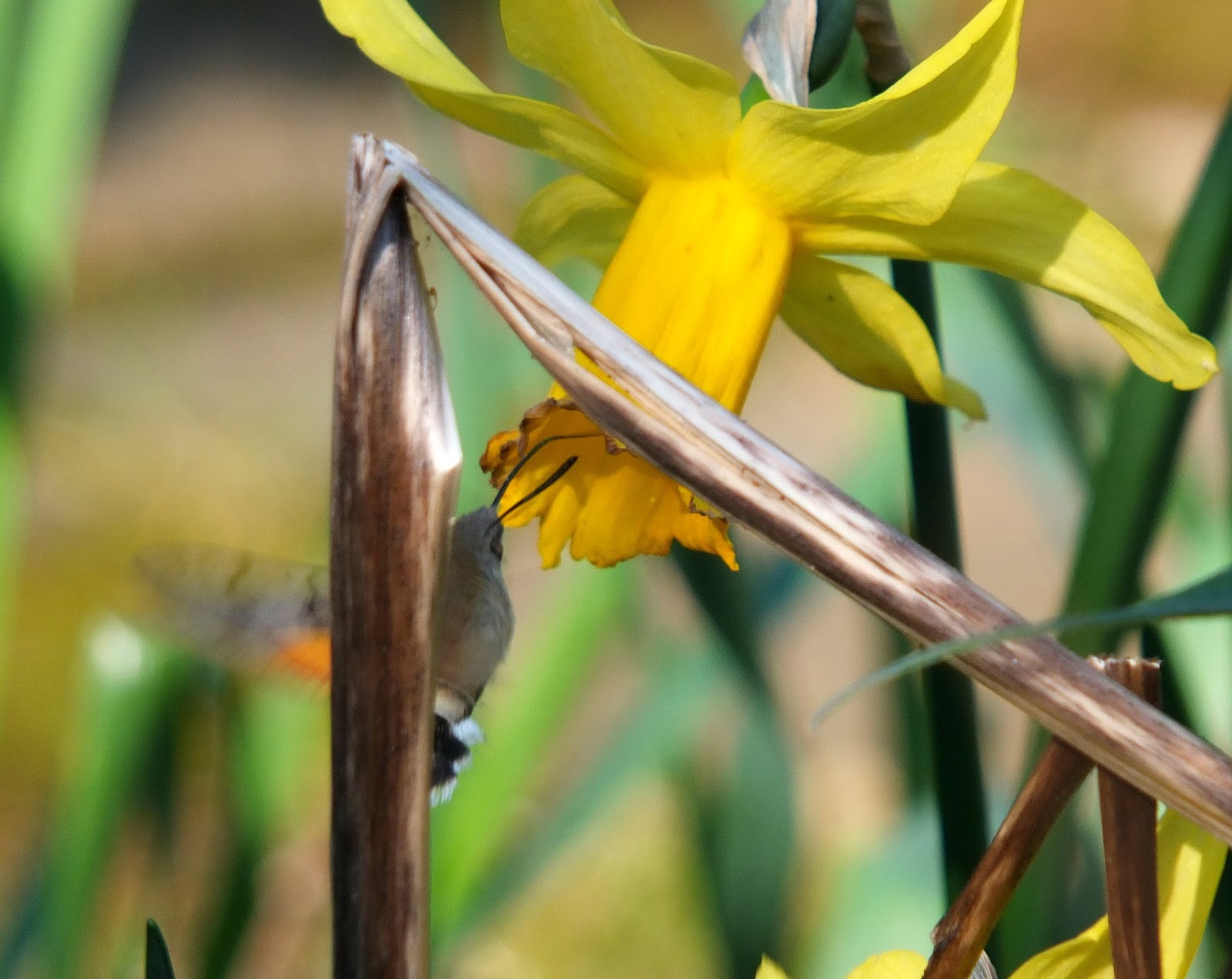

Humming-bird Hawk-moth - Matt Phelps
Butterflies and moths aren't the only winged insects springing back to life with the onset of spring, as there are now plenty of bumblebees and honey bees to be seen out on the early flowering plants and, much like the bees, Ann Jacobs has been busy photographing them.
Buff-tailed Bumblebee - Ann Jacobs
Honey bee - Ann Jacobs
And finally, to finish, another of Ann's photos; this time one of a handsome Roe buck. As usual there are quite a few Roe Deer around the place and you might be lucky enough to spot them when you visit.
Roe buck - Ann Jacobs


Sunday, 29 November 2015

Wild Winkworth, November 2015

As always, lots to talk about these past few weeks. It's been a largely mild, grey and drizzly kind of November with just a very short-lived cold snap during the third week, producing a couple of frosty nights and even the odd snow flurry. The autumn colour ended pretty abruptly this year, thanks to the cold combined with some high winds, but it was by all accounts one of the best colour displays in recent years. Visiting Winkworth towards the end of the month though you could be forgiven for thinking you'd missed winter and we'd jumped straight to spring as there are already Daffodils, Witch Hazels and Cherry trees all flowering around the arboretum!

November is a great time to get out and see some of the bird species that migrate to our shores for the winter, and Winkworth is as good a place as any in Surrey to see some of them. The many berry-bearing trees and shrubs around the arboretum have been teeming with thrushes recently, particularly the yellow-berried Sorbus 'Joseph Rock' near the main car park, which was covered in Redwings, Blackbirds, Song Thrushes and Fieldfares every day last week. 
Song Thrush

Redwings
I've been seeing and hearing plenty of Bramblings about the place recently, peaking at sixteen on the 18th when I photographed these two in Furze Field.
Crossbills were recorded several times during the month, the highest number being five which flew over the Bowl on the 10th. On the 19th a Little Egret flew low south-west over Rowe's Flashe Meadow, seemingly coming down towards the southern end of the lake but as I was in the middle of doing post-storm tree inspections at the time I wasn't able to check. I only noted Firecrest twice this month, on the 7th and the 24th, on both occasions in the vicinity of the boathouse. Unfortunately I wasn't able to get a photo but John Rowland did capture this nice image of the more common Goldcrest the other day. 
On the 17th a Woodcock flew south-east over Rowe's Flashe Meadow at dusk while on the 24th one flew up in my car headlights as I drove home along the road by Phillimore Wetland.
The frosty start on the 23rd had an air of northern promise about it and I was half expecting something a bit unusual to appear when half a dozen 'Grey Geese' flew in from the north-west over the top arboretum. I only got the briefest of views and only heard a couple of calls but it was enough to tell me they were not Greylags. Beyond that I wouldn't want to say for sure!
Other species of note this month have included Water Rail (two calling together in Phillimore on the 27th), Marsh Tit (popping up all over the place recently), Reed Bunting (either in the reedbed by Rowe's Flashe or in Phillimore), occasional Kingfishers at Rowe's Flashe Lake and a Winkworth first for me in the form of a Yellowhammer which flew north on the 8th. There have also been some characteristically massive movements of Woodpigeons, such as on the 9th when at least two thousand flew south first thing. 

As ever there have been a few Roe Deer around the arboretum recently, and in quieter moments they will allow you to approach very close, like these two I photographed in the Bowl on the 18th. 
Keeping on the mammal theme, on the 27th I somewhat belatedly saw my first Winkworth Stoat, albeit very briefly, as it scuttled across the path in front of me near Rowe's Flashe Meadow. 

Another thing to look for at this time of year is of course fungi, and there's a wide array of weird and wonderful specimens to be seen around the arboretum at the moment. I don't confess to be the greatest mycologist but volunteer Ann Jacobs thankfully is and has been taking some wonderful photographs here recently, like this Common Eyelash (Scutellinia scutellata) she found on a dung heap near the overflow car park. 
Although butterflies are now fast becoming a distant memory - aside from the Small Tortoiseshell I saw on the 18th - there is still some lepidopteran interest to be had in the form of some of the autumn moth species, some of which are more colourful than others. Several moths even found their way into the temporary public toilets earlier in the month which I took photos of as I extricated them each morning.
Sprawler (Asteroscopus sphinx)
November Moth agg. (Epirrita sp.)
Mottled Umber (Erannis defoliaria)

That's all for this time. To finish, how about this for a gorgeous sunrise? Who says the autumn colour is all gone!

*


Monday, 31 August 2015

Wild Winkworth, August 2015

There's something about the middle to end of August that I can never quite put my finger on but I absolutely love. The misty, dewy mornings, the golden sunlight, the subtle scent of ripening fruit - it all adds up to the unmistakeable and wholly wonderful feeling of early Autumn. I know Autumn is a dirty word to some people, bringing with it as it does images of endless grey and drizzly days, soggy leaves and the long winter to come, but I just love the change, the feeling of an endless cycle, things taking place in their natural order, season following season, unfettered by our daily goings-on. Winkworth is a great place to observe these changes, as each day brings new things to see as wildlife prepares for the season ahead and - whisper it - the leaves begin to turn. Yes, any of you who have visited the arboretum recently will have noticed there's already a fair few reds, golds and yellows beginning to pop up amongst the greens - particularly amongst some of the Acers. Liquidambars and those strikingly red Cercidiphyllum japonicums in Rowe's Flashe Meadow.
It's not just the leaves that are changing colour; there are also some brightly coloured berries ripening up around the arboretum. Look up on Sorbus Hill and you'll see the colourful sprays of the various Sorbus berries, while amongst the nettles and leafy undergrowth beneath the trees you may spot the bright red-orange spikes of Arum maculatum.
 I mentioned in my last blog post about the birds beginning to move and that has stepped up a pace in the past few weeks. The Swifts have now all but gone; I saw one locally on the 22nd but haven't seen one over the arboretum itself since the 10th. Swallows are now on the move too with some fairly steady southerly movements noted recently. There have also been some sizeable congregations of House Martins - on the 18th at least 40-50 were over Sorbus Hill. The large flocks of Chiffchaffs and other small birds around Rowe's Flashe Lake seem to be getting bigger every day and attracting all sorts of species into their ranks, including several Willow Warblers and the odd Garden Warbler and Whitethroat. On the morning of the 23rd I noted Firecrest, a singing Willow Warbler and several Marsh Tits flitting about in the trees by the boathouse. Talking about the boathouse, and moving away from birds for a moment, I got a bit of surprise when I opened the boathouse on the 2nd and checked the 'Plant of the moment' samples only to find this Old Lady moth on one of the Cotinus clippings!  


The predominant raptor species this month have been Sparrowhawk and Buzzard, both having evidently bred locally as there have been very vocal juveniles of both species in the arboretum recently. A family group of Sparrowhawks made their presence known in the Phillimore Wetlands for most of the middle of the month, while a family of Buzzards have been similarly vocal towards the southern end of Rowe's Flashe Lake. Some days it's seemed almost as if the two sets of juveniles have been playing a game of 'who can whine the loudest', the sound of their cries echoing around the arboretum. Early on the 12th there were eight Buzzards soaring over The Bowl - the highest number I have seen together here to date. While having my lunch on the 30th I caught a brief glimpse of what I judged to be a Goshawk flying north-east low over the upper arboretum. I alerted my friend Ed who I knew was birding on the other side of the valley from Winkworth at the time and he was able to locate the bird in question and confirm its identity. A first record for the arboretum as far as I can tell!
Five of the eight Buzzards soaring over The Bowl on the 12th

On Rowe's Flashe Lake it's been a rather quiet few weeks. On the 11th a female Mute Swan was present for a couple of hours before flying off north - amazingly only my second record here this year - while on the 18th a female Pochard made a brief appearance. By the middle of the month the remaining three Canada Goose youngsters had mysteriously disappeared, and the last I saw of the two adult birds was on the 19th. Kingfishers were seen on heard several times throughout the month, including a juvenile on the 19th. Grey Wagtails are a common enough sight around the lake and spillways but a congregation of six together on the 28th was an unusually high count - presumably the family group that recently vacated the wall of the boathouse. There are still a few Little Grebes and Mandarin Ducks to be seen as well.
Mute Swan on Rowe's Flashe Lake

Other bird highlights in August have included the return of Water Rails to Phillimore Wetlands, with one announcing its presence with its unmistakeable squealing on the 7th. I've heard it regularly since, and on the 13th there were certainly at least two calling in the Gunnera Swamp area. Flyovers have included Hobby (24th) and Raven (29th). Also on the 29th it was good to come across a Spotted Flycatcher flitting around the trees in the north-western corner of the arboretum, roughly between the overflow car park and the viewing platform; the first one I've seen here since the one that hung around for a while in June, so this is likely a bird stopping off on its way from its breeding area back to its wintering grounds in the tropics of Africa. It may not have come all that far though, as I have recently seen a couple of family groups along the neighbouring Thorncombe Street.
I unfortunately didn't have my camera handy to photograph the Flycatcher, so instead here's a juvenile Song Thrush I photographed on Sorbus Hill on the 11th.

On to butterflies now, and it's been rather quiet on that front just lately, partly due to the wet weather in the past week or so but also as some species are coming to the end of their flight season. There's still beeen a few around though, especially worthy of note is this Painted Lady I photographed sunning itself along the Spring Walk on the 22nd.
On the 17th we stumbled across this striking individual in our yard. It's a Buff-tip moth caterpillar. If you haven't ever seen a Buff-tip moth then look it up - they are amazingly camouflaged to look like a bit of broken twig!
With the damper weather recently there's been some cracking fungi popping up around the arboretum like this Chicken of the Woods along the Spring Walk.
There are also Parasol mushrooms in Rowe's Flashe Meadow...
 ...and this lovely Shaggy Inkcap halfway along the dam.
Whilst we were driving past the Winter Garden on the 14th fellow gardener Giles spotted this little Wood Mouse running around. I was amazed how close it let me get - I took this picture on my phone camera with very little zoom! I think it thought if it stayed still I wouldn't see it.

I unfortunately wasn't able to attend the bat walk on the 15th but I'm told it was well attended and several bats were seen and heard on the bat detectors, including Common and Soprano Pipistrelles, Noctule, and Daubentons, the latter seen skimming low over Rowe's Flashe Lake catching insects.
There have been loads of dragonflies around lately, with Southern Hawker and Brown Hawker being the most numerous and conspicuous, although I've also noted the odd Migrant Hawker darting around higher up in the tree canopy.
On the 28th, Grass Snakes and Slow-worms were seen basking on paths in the warm morning sunshine, although sadly neither was obliging enough to hang around for a photo!
Finally, to finish this rather eclectic blog post, a Tanner Beetle! This large beetle species - one of the largest found in the UK - is classified as nationally scarce, so needless to say I was rather surprised to stumble across this one while sweeping out the gardeners' workshop on the 30th. 
Tanner Beetle - what a beast!

*


Tuesday, 4 August 2015

High summer at Winkworth

Eucryphia glutinosa

July is invariably a frantically busy month in most gardens and Winkworth is no exception, as the gardeners and volunteers have been hard at work recently endeavouring to hold back the sea of bracken and brambles threatening to engulf every footpath and specimen tree onsite. In amongst the hard graft and rushing around though, it’s good to pause and take time to appreciate the sights and sounds of the wildlife around the place.
Down at Rowe’s Flashe Lake we have at last seen our first Moorhen chicks of the year, with three present on the 11th, rising to at least five by the end of the month. Other new additions of late have been at least four Tufted Duck ducklings, more Mallard chicks and up to six young Little Grebes. The resident family of Canada Geese are still around, although I noticed towards the end of the month that one of the goslings had disappeared, leaving just three.

Moorhen chicks

Tufted Duck female and young

There are plenty of young birds to be seen (and heard) away from the water too. We now have a resident family of Buzzards which presumably bred locally. They can often be seen and heard – particularly the very vocal juveniles – in the trees towards the southern end of Rowe’s Flashe Lake/Meadow, or soaring overhead.

Listen out too for the constant ‘huweet’ call of the many Chiffchaffs flitting about in the trees and shrubs by the lake. On the 21st there were some brief bursts of song to be heard from a Garden Warbler in the brambles at the south-eastern corner of the lake. It’s good to know they’re still around, although I’ve yet to see any juveniles so don’t know if they’ve successfully bred. 
In the wall of the boathouse a pair of Grey Wagtails successfully fledged a brood of young early in the month. As I went down to close the boathouse one evening I joined a group of visitors who were gathered round enjoying watching through the windows as the adult birds alighted on the balcony railing with bills of food before delivering them to the noisily begging youngsters.
Buzzard

Although from our perspective, with the onset of the school holidays, summer is just getting into gear, for many birds the breeding season is already reaching its end and from as early as the first week of the month I observed small numbers of Swifts beginning to move southwards over the arboretum. As Gilbert White commented, “How strange is it that the swift, which seems to live exactly the same life with the swallow and house-martin, should leave us before the middle of August invariably!” As they are one of my favourite birds it’s always rather sad to see them go.

Sorbaria sorbifolia on Sorbus Hill

Early on 27th July there was a clear demonstration of migration in action as over a hundred Swifts piled west at quite some height in a tight group, followed swiftly (no pun intended) by a Black-tailed Godwit going the same way very high – the first documented record of one here. Other ‘vismig’ (visible migration) records in recent weeks have included Crossbills - one west on the 11th and nine south-west on the 16th – and Sand Martin, with one high over Rowe’s Flashe Lake with a couple of Swifts on the 22nd the only record this year. As far as I know they don’t breed anywhere particularly local to Winkworth so this individual was presumably on the move.

Rowe's Flashe Meadow

A few other bird highlights from July: Ravens were seen on the 20th, when one flew east, and the 23rd when one flew north-west. On the morning of the 21st a Hobby flew south-west over Rowe’s Flashe Lake. On the 29th there were two Whitethroats amongst lots of warblers and finches in the bushes in Furze Field – my only record to date at Winkworth of this otherwise fairly common species.
Essex Skipper

The number of butterflies on the wing in the arboretum has exploded in the last few weeks and it’s now easy to see 15-20 species here on a sunny day. The grassy areas are full of Meadow Browns, Ringlets, Large and Small Skippers, while on the 16th I noted the first Essex Skipper of the year in Rowe’s Flashe Meadow. The somewhat scarcer relation of the Small Skipper, the defining feature of the Essex Skipper is its black antennae tips (Small Skippers’ antennae have orangey-brown tips - see picture below)

Small Skipper

Gatekeeper

Red Admiral having a rest on the senior gardener's hand!

While bracken bashing in Bluebell Wood with a big volunteer group on the 28th (we crush the bracken rather than cut it as this is widely regarded as a more effective method of reducing its vigour, thereby giving other plants a chance) it was entertaining to watch a Brown Hawker dragonfly chasing a Silver-washed Fritillary around at eye level. Just one of many sightings in recent weeks of this majestic woodland butterfly which seem to be thriving at Winkworth. 

Silver-washed Fritillary

Buddleia is a great source of nectar for butterflies and other pollinators at this time of year. The other day I counted twenty-four individuals of nine species on a single bush! We have a few Buddleias dotted about the arboretum so it's worth looking out for one and lingering for a spot of butterfly watching if you're visiting soon, or even better plant some in your own garden if you have space.  

Copper Underwing moth

Another fun thing to look for at this time of year is caterpillars. There’s a huge array of weird and wonderful larvae to be found if you keep your eyes open, like the bright yellow and black striped Cinnabar moth caterpillars, or this monster Drinker moth larvae I photographed down in Phillimore Wetland. They can grow up to 7cm in length!
The wild Honeybees in the arboretum have been very active recently, particularly the colony in the boathouse which have been swarming on occasion. Plants such as Sorbaria and Aralia (pictured below have been proving very popular!


 *