Showing posts with label winkworth. Show all posts

Saturday, 26 March 2016

Winkworth springs to life


Well, lots to talk about since my last blog post, even though it's only been a couple of weeks. It's been a mixed bag on the weather side of things, with an extended spell of north-easterly winds giving a couple of weeks of largely dry, often fine but chilly weather. Now the winds are back in the south/south-west and after the warmest day of the year so far on Good Friday we're now back to rather damp and unsettled for the Easter weekend. Still, there are signs of new life bursting forth all over the arboretum now.
As happened this time last year the north-easterly winds have rather held back some of the spring migrant birds, but this past week or so the first Chiffchaffs have begun returning, and just this morning I noted at least five around the arboretum, some occasionally singing their eponymous song, despite the foul weather. 
Chiffchaff - Ann Jacobs
Another bird we tend to see more of at this time of year, Pochards have been present throughout the month on Rowe's Flashe Lake, and in varying numbers, peaking at five on the 8th and the 10th. Volunteer Ann Jacobs captured these great pictures of one of the drakes, including one of him in mid-dive!
Pochard - Ann Jacobs
Also making more regular appearances at Rowe's Flashe recently have been a couple of Kingfishers, which Ann again managed to photograph on the 22nd.
Kingfishers - Ann Jacobs
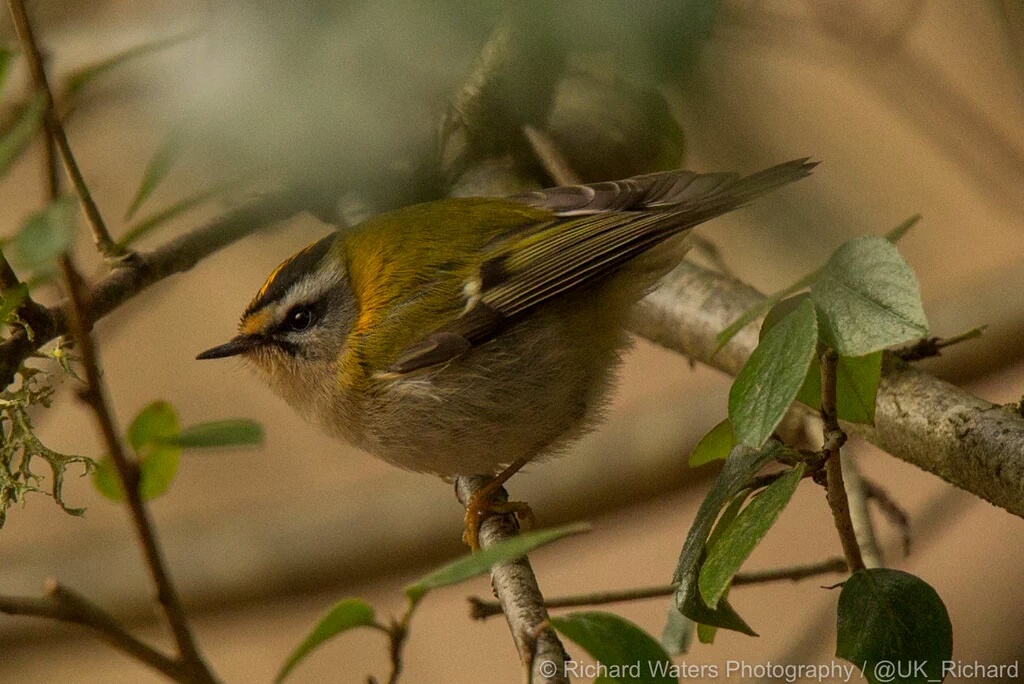
The other star bird which has been receiving a fair amount of photographic attention is the Firecrest that's been seen on and off near the boathouse. Both John Rowland and Richard Waters managed to get some lovely shots.
Firecrest - Richard Waters
Firecrest - John Rowland
Water Rails are being heard more regularly again in the Phillimore Wetland, and there were definitely two present on the 8th and the 13th. We now appear to have a regular pair of Red-legged Partridge hanging around which I've seen near the boathouse or in a Bluebell Wood a few times recently. Makes a change from the ubiquitous Pheasants!
Red-legged Partridge - Matt Phelps
If you've walked through the upper arboretum in the past week or two you may have noticed a lot of birds flying up from the ground around you. These are the gathering Redwings feeding up and preparing to head back to Scandinavia and Russia for the breeding season. On sunnier days they have been particularly chattery, even singing occasionally. 
While migrant birds are busying themselves arriving and departing, many of our resident species are already getting into the business of nest building and breeding. I stumbled across this Long-tailed Tit nest the other day. Such incredible engineering to build something like this out of moss and lichen!
Long-tailed Tit nest - Matt Phelps
On Good Friday there appeared to be some raptor migration going on, with at least 4-5 Buzzards flying purposefully north, a Red Kite south and a female Goshawk moving powerfully north/north-west which Ed Stubbs later picked up at considerable height over Allden's Hill just to the north of the arboretum. There have been occasional sightings of Sparrowhawk and Kestrel, while single Peregrines were seen on the 13th and the 22nd.
Buzzard - Ann Jacobs
The sunshine in the past week or two has been enough to coax out the first of the hibernating butterflies. On the 13th I saw a Peacock, while on the 17th I saw my first Brimstone and Small Tortoiseshell of the year. The most remarkable lepidopteran moment recently though was the Humming-bird Hawk-moth I stumbled across nectaring on Daffodils near the Winter Garden on the 13th. I had only ever previously seen this species in mid to late summer as it tends to migrate up from the continent. I can only assume this individual had hibernated nearby. 
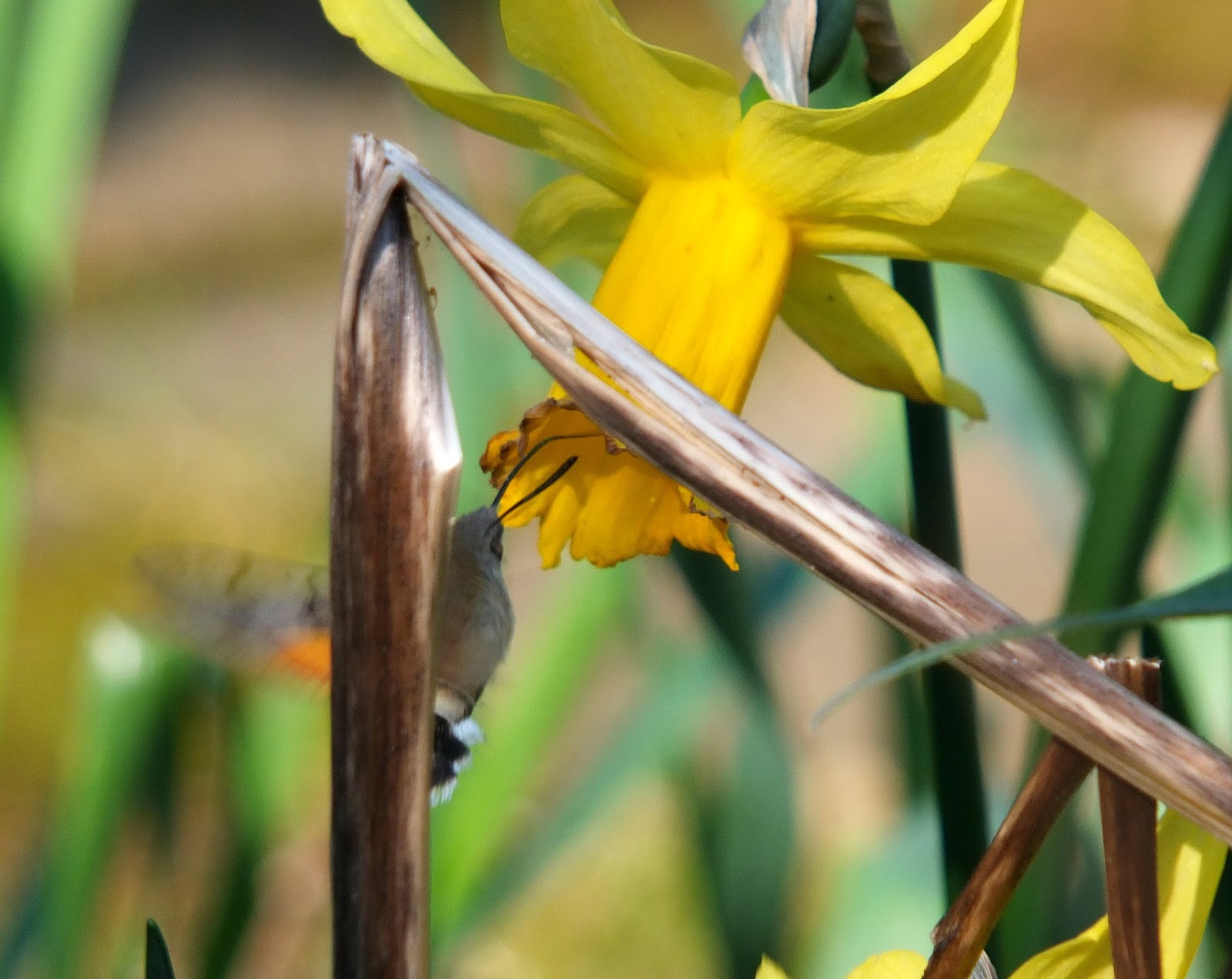

Humming-bird Hawk-moth - Matt Phelps
Butterflies and moths aren't the only winged insects springing back to life with the onset of spring, as there are now plenty of bumblebees and honey bees to be seen out on the early flowering plants and, much like the bees, Ann Jacobs has been busy photographing them.
Buff-tailed Bumblebee - Ann Jacobs
Honey bee - Ann Jacobs
And finally, to finish, another of Ann's photos; this time one of a handsome Roe buck. As usual there are quite a few Roe Deer around the place and you might be lucky enough to spot them when you visit.
Roe buck - Ann Jacobs


Saturday, 5 March 2016

Wild Winkworth, late February/early March


Plenty to report from the second half of February and early March at Winkworth. Things have turned altogether more chilly in the past couple of weeks although this hasn't slowed down the approach of spring as bird song and woodpecker drumming is increasing every day it seems and there is now a fair bit of early spring colour around the arboretum - but more on that later.

First off, a few bird highlights. Down at Rowe's Flashe Lake it was good to welcome back a trio of Pochards on 28th Feb - two drakes and a female, at least two of which are still present as I write this on 5th March. On the 22nd there was a Bar-headed Goose honking away in the drizzle first thing - only the second time I've seen one here and, as I've mentioned before, clearly an escape from somewhere.
Firecrests were seen near the boathouse on 27th Feb and 4th March. These little birds never stop flitting about which makes them hard to photograph, so John Rowland did a great job of getting this picture.
Firecrest - John Rowland
I got a bit of a surprise on the morning of 2nd March when I went down to open the boathouse only to find two Grey Wagtails flying about inside. They bred in the wall last year so perhaps they were investigating possible nest holes for this year when they inadvertently ended up inside the building. Canada Goose numbers are increasing - there were eleven present on 27th Feb. Ravens have been seen and heard on several occasions recently and on 18th Feb I photographed one cronking (giving its distinctive bellowing call) low over Furze Field.
Raven - Matt Phelps
Buzzards have been up and displaying on sunnier days along with the odd Sparrowhawk and Red Kite. Meanwhile, Red-legged Partridges are becoming a more regular occurence in the arboretum, seemingly venturing further from the neighbouring Wintershall estate - on 4th March there was one calling right up the slope on the western side of Bluebell Wood. Finally, the Yellowhammer that flew west on 18th Feb was only my second record of this species here.
Buzzard - Matt Phelps
In other news, eagle-eyed volunteer Ann Jacobs has been out and about with her camera capturing all manner of shots around the place, from the tiny...

Butcher's Broom (Ruscus aculeatus) flower - Ann Jacobs
...to the not so tiny...
Roe Deer - Ann Jacobs
She's also been photographing the now numerous flowers opening up, and one of the many creatures that rely on them as an early source of pollen.


Lesser Celandine - Ann Jacobs


Salix laevigata buds - Ann Jacobs


Honey bee on Snowdrop - Ann Jacobs

If you've visited Winkworth recently you can't have failed to miss the golden swathes of Daffodils all over the place: they really are looking gorgeous when the sun shines now.

Daffodils on Sorbus Hill - Matt Phelps
Considerably harder to find though are the very early Bluebells, as there's still only the odd flower here and there amongst the carpets of green spikes, but they are coming!

Bluebell - Matt Phelps


Wednesday, 17 February 2016

February at Winkworth: some recent photos

Less words and more photos is the theme of this blog post, as there's not been a massive amount of new wildlife sightings to report since my previous post.

Worth a mention though are the seven Red-legged Partridge which were in Rowe's Flashe Meadow early on the 10th Feb - the highest count I've seen at Winkworth to date. Then on the 13th I was lucky enough to witness two Stoats scurrying around the gardeners' bonfire and compost area, just up the slope from the viewing platform. They were in view for several minutes and it was wonderful to watch them running about and diving in and out of the various piles of logs and things. Just typical I didn't have my camera to hand at that moment!

Luckily, both I and volunteer Ann have had chance to get out in the arboretum with our cameras recently though, and here's a selection of photos from the past couple of weeks.
Singing Robin - Matt Phelps
Long-tailed Tit - Ann Jacobs
Song Thrush - Matt Phelps
Grey Heron - Ann Jacobs
Hazel catkins - Ann Jacobs

Cherry blossom - Ann Jacobs
Ribes sanguineum (flowering currant) - Matt Phelps

Daffodils - Matt Phelps
Willow catkin (presumed Salix laevigata) - Matt Phelps


Monday, 8 February 2016

Wild Winkworth, late January-early February

Another mixed two or three weeks on the weather front here. The day after I posted my previous blog post we had our first, and so far only, notable snowfall of the winter and the arboretum looked lovely and wintry for a few hours until it all turned to soggy mush by lunchtime. Indeed, that third week of January saw Rowe's Flashe Lake frozen over for several days, and the ducks looked rather unimpressed as they huddled patiently on the surface for the thaw. 
Frozen Rowe's Flashe
This Little Grebe managed to find the only area of unfrozen water
- right in front of the boathouse
As I write this now (6th Feb), however, there is a fierce south-westerly wind roaring through the trees in the upper arboretum and the temperature is a balmy 12 degrees celsius. These extremes of weather have done little to detract from the fact that this winter has so far been exceptionally mild and the frantic rush of plants growing and flowering weeks or even months ahead of schedule continues. In addition to the carpets of Daffodils, Snowdrops and Primroses around the place, this past week the senior gardener and I have discovered the first Magnolias and Azaleas beginning to bloom, and just this morning I found this little flower spike out on Sorbus Hill amongst the myriad green spikes pushing through the leaf litter. Any guesses?
Yes, incredibly, it's a Bluebell! In February!
Don't worry though - I'm sure the best displays are still several weeks away yet
On the bird front it was interesting to note a little flurry (pun intended!) of cold weather movement on the 'snow day' (17th Jan) with eight Bramblings and nine Crossbills flying south in the afternoon, while on the 20th there were two Bramblings briefly in a tree along the Spring Walk before they flew off north-east.  Gull movement has noticeably picked up recently too, with plenty of Common Gulls moving west most mornings, and on the 20th a Great Black-backed Gull few south-east around lunchtime - my only record to date of this species here.
Common Gulls circling over the Spring Walk
On 20th Jan and 6th Feb I heard a Water Rail calling in the Phillimore Wetland - this species seems to have been a bit more elusive this winter than last. On the morning of the 25th, while I was carrying out the morning site check, I was surprised to see a Tawny Owl fly out of a conifer near the carved throne seat and disappear into the trees near the boathouse. In fact, so seldom have I seen Tawny Owls flying in daylight it took me a moment to realise what I was looking at! Meanwhile, on the morning of 3rd February I stumbled across a couple of Red-legged Partridges scurrying into the brambles at the south end of Rowe's Flashe Meadow - my first record of this species here in 2016. 
Looking east across the Badger's Bowl to the Wintershall Estate beyond
The amount of bird song here is increasing almost daily now, particularly on fine sunny mornings (when we get them!) when it's possible to hear at least ten species singing on a short walk around the upper arboretum, including Chaffinch, Stock Dove, Great Tit, Mistle Thrush, Song Thrush, Collared Dove and Coal Tit. Great Spotted Woodpeckers can now be heard drumming regularly too. On the bird of prey side of things, both Buzzard and Sparrowhawk have been a regular sight recently, the latter beginning to display overhead, again on fine days. On 1st February there were two Red Kites circling together over the lower arboretum first thing in the morning, the local Jackdaws doing their best to chase them off! Just after noon on the 6th a Peregrine flew south over the gardeners' work yard, looking like it was struggling somewhat as it battled straight into the strong wind. My first one here this year.
The local Roe Deer are still around - I stumbled across this group of five on Sorbus Hill first thing in the morning a couple of weeks ago. They really are so well camouflaged against the carpet of dried bracken.


*

Saturday, 23 January 2016

Winter at Winkworth - article for The Bridge


I write a regular piece for local magazine 'The Bridge' and thought I'd share the latest one on here for you all to read.

The full magazine can be downloaded here.


Thursday, 31 December 2015

Wild Winkworth, 2015's swan song

And so we reach the end of 2015, as what is touted to be the warmest December on record draws to a close. The strongest El Niño event for many years has in part led to a rush of warm air from the south-west, bringing with it a series of Atlantic storms to our shores. This has meant lots of wind and rain but also exceptionally mild weather for the time of year, with temperatures in double figures for most of the month. On the 19th a high of 16 celsius was recorded here in Surrey. The mild winter isn't just affecting Britain though as unusually high temperatures have been recorded across much of northern Europe and North America, and even the North Pole where the temperature reach a balmy +1 celsius this week; over 20 degrees warmer than average for this time of year.
The consequence of all this spring-like weather in midwinter has been some exceptionally early flowering plants, and even some fresh leaves emerging on some of the trees already, but more on that later.

As usual though I'll start with a round-up of the bird life at Winkworth in the past couple of weeks.
There have been noticeably more gulls moving overhead recently, mostly Herring Gulls and mostly heading south-west first thing in the morning.
Herring Gulls

 In amongst the gulls a couple of Egyptian Geese also flew south-west over Rowe's Flashe Lake on Christmas Eve. 
Egyptian Geese were also recorded flying over on the 21st and the 27th. Other noteworthy flyovers recently have included Raven, with one west on the 27th and another south-west on the 31st, and single Red Kites east on the 23rd and 24th.
Whilst opening the boathouse on the 26th I heard a 'te-zek' call high overhead and just briefly caught a glimpse of a roughly Chaffinch-sized bird disappearing over the trees, heading south, before it called again: 'tchuu'. I can't say for certain but the only bird I can think of with a call that matches that is Lapland Bunting. The sacrificial game crop fields across the Thorncombe Valley do, I know, attract good numbers of Reed Buntings and Yellowhammers at this time of year, so who's to say this bird hadn't stopped off there before heading further south?
Down at Rowe's Flashe there have been noticeably more Tufted Ducks recently, with over thirty recorded on some days towards the end of the month. Volunteer Ann Jacobs captured this nice shot of some on the 28th. 
Meanwhile a Kingfisher continues to maintain a regular presence, as do the roosting Reed Buntings in the reedbed on the eastern side. There were at least three in there first thing on the 23rd

Pheasants are a familiar sight all around the arboretum, particularly so at this time of year when there's rather less vegetation for them to hide in. Volunteer Ann photographed this male in Badger's Bowl recently.
Moving on to woodland birds, and there have been plenty of Redwings, Siskins and Bullfinches around, as usual. On Christmas Eve I noted five Bullfinches along the Spring Walk, including one singing. There's also regularly been a singing Dunnock here in recent days.  
Single Bramblings were noted on the 17th when one flew east and the 26th when one briefly alighted in a tree near the car park before flying south-east.
There was a Firecrest calling in the vicinity of the boathouse on Christmas Eve while on Christmas Day I was told there was one calling along the footpath just on the south-western edge of the arboretum.
The local Buzzards and Sparrowhawks have started to display over the arboretum in recent days; another surefire sign that spring is getting nearer.


Male Sparrowhawk
Meanwhile, I noted the first drumming Great Spotted Woodpecker of the season by Rowe's Flashe early on the 31st.
Also on the 31st there was a Red Admiral on the wing, flying high around the treetops in The Bowl. The last butterfly of the year!

The more open landscape at this time of year provides more opportunities to catch a glimpse of our resident Roe Deer. I had a close encounter with this group on Sorbus Hill the other morning.
If you've visited Winkworth recently you won't have been able to miss the swathes of golden daffodils around the upper arboretum, but they are not the only floral signs of spring to be found, as the mild weather has induced many plants to flower weeks or, in some cases, months earlier than normal. Here's just a small selection of some I've noticed this past week or so:


Primrose (Primula vulgaris) - Usual flowering time: March-May


Dog's Mercury (Mercurialis perennis) - Usual flowering time: February-April


Wild Strawberry (Fragaria vesca) - Usual flowering time: April-July


Common Vetch (Vicia sativa) - Usual flowering time: May-September

However the biggest surprise for me was during the Boxing Day walk when I noticed these newly-emerging leaves on a Pedunculate Oak (Quercus robur) in Badger's Bowl. 

Previous El Niño winters have ended with a blast of cold weather in February and March. If this winter follows suit then much of our flora and fauna is in for a rather nasty shock!