Tuesday, 4 August 2015

High summer at Winkworth

Eucryphia glutinosa

July is invariably a frantically busy month in most gardens and Winkworth is no exception, as the gardeners and volunteers have been hard at work recently endeavouring to hold back the sea of bracken and brambles threatening to engulf every footpath and specimen tree onsite. In amongst the hard graft and rushing around though, it’s good to pause and take time to appreciate the sights and sounds of the wildlife around the place.
Down at Rowe’s Flashe Lake we have at last seen our first Moorhen chicks of the year, with three present on the 11th, rising to at least five by the end of the month. Other new additions of late have been at least four Tufted Duck ducklings, more Mallard chicks and up to six young Little Grebes. The resident family of Canada Geese are still around, although I noticed towards the end of the month that one of the goslings had disappeared, leaving just three.

Moorhen chicks

Tufted Duck female and young

There are plenty of young birds to be seen (and heard) away from the water too. We now have a resident family of Buzzards which presumably bred locally. They can often be seen and heard – particularly the very vocal juveniles – in the trees towards the southern end of Rowe’s Flashe Lake/Meadow, or soaring overhead.

Listen out too for the constant ‘huweet’ call of the many Chiffchaffs flitting about in the trees and shrubs by the lake. On the 21st there were some brief bursts of song to be heard from a Garden Warbler in the brambles at the south-eastern corner of the lake. It’s good to know they’re still around, although I’ve yet to see any juveniles so don’t know if they’ve successfully bred. 
In the wall of the boathouse a pair of Grey Wagtails successfully fledged a brood of young early in the month. As I went down to close the boathouse one evening I joined a group of visitors who were gathered round enjoying watching through the windows as the adult birds alighted on the balcony railing with bills of food before delivering them to the noisily begging youngsters.
Buzzard

Although from our perspective, with the onset of the school holidays, summer is just getting into gear, for many birds the breeding season is already reaching its end and from as early as the first week of the month I observed small numbers of Swifts beginning to move southwards over the arboretum. As Gilbert White commented, “How strange is it that the swift, which seems to live exactly the same life with the swallow and house-martin, should leave us before the middle of August invariably!” As they are one of my favourite birds it’s always rather sad to see them go.

Sorbaria sorbifolia on Sorbus Hill

Early on 27th July there was a clear demonstration of migration in action as over a hundred Swifts piled west at quite some height in a tight group, followed swiftly (no pun intended) by a Black-tailed Godwit going the same way very high – the first documented record of one here. Other ‘vismig’ (visible migration) records in recent weeks have included Crossbills - one west on the 11th and nine south-west on the 16th – and Sand Martin, with one high over Rowe’s Flashe Lake with a couple of Swifts on the 22nd the only record this year. As far as I know they don’t breed anywhere particularly local to Winkworth so this individual was presumably on the move.

Rowe's Flashe Meadow

A few other bird highlights from July: Ravens were seen on the 20th, when one flew east, and the 23rd when one flew north-west. On the morning of the 21st a Hobby flew south-west over Rowe’s Flashe Lake. On the 29th there were two Whitethroats amongst lots of warblers and finches in the bushes in Furze Field – my only record to date at Winkworth of this otherwise fairly common species.
Essex Skipper

The number of butterflies on the wing in the arboretum has exploded in the last few weeks and it’s now easy to see 15-20 species here on a sunny day. The grassy areas are full of Meadow Browns, Ringlets, Large and Small Skippers, while on the 16th I noted the first Essex Skipper of the year in Rowe’s Flashe Meadow. The somewhat scarcer relation of the Small Skipper, the defining feature of the Essex Skipper is its black antennae tips (Small Skippers’ antennae have orangey-brown tips - see picture below)

Small Skipper

Gatekeeper

Red Admiral having a rest on the senior gardener's hand!

While bracken bashing in Bluebell Wood with a big volunteer group on the 28th (we crush the bracken rather than cut it as this is widely regarded as a more effective method of reducing its vigour, thereby giving other plants a chance) it was entertaining to watch a Brown Hawker dragonfly chasing a Silver-washed Fritillary around at eye level. Just one of many sightings in recent weeks of this majestic woodland butterfly which seem to be thriving at Winkworth. 

Silver-washed Fritillary

Buddleia is a great source of nectar for butterflies and other pollinators at this time of year. The other day I counted twenty-four individuals of nine species on a single bush! We have a few Buddleias dotted about the arboretum so it's worth looking out for one and lingering for a spot of butterfly watching if you're visiting soon, or even better plant some in your own garden if you have space.  

Copper Underwing moth

Another fun thing to look for at this time of year is caterpillars. There’s a huge array of weird and wonderful larvae to be found if you keep your eyes open, like the bright yellow and black striped Cinnabar moth caterpillars, or this monster Drinker moth larvae I photographed down in Phillimore Wetland. They can grow up to 7cm in length!
The wild Honeybees in the arboretum have been very active recently, particularly the colony in the boathouse which have been swarming on occasion. Plants such as Sorbaria and Aralia (pictured below have been proving very popular!


 *


Sunday, 5 July 2015

Midsummer at Winkworth

Well, after a rather changeable start to the month, the second half of June and the first few days of July have been largely dry, sunny and warm - very warm at times, the temperature peaking at 35 degrees celsius on 1st July. The arboretum is a wonderful place to be in such conditions with welcome relief to be found from the baking heat under the shade of the trees.

By mid to late June many of our resident birds are already nearing the end of their breeding season and it’s about now one begins to notice rather less birdsong around and about. Some species remain fairly vocal, the Blackcaps and Chiffchaffs for instance, and I’ve been hearing Garden Warbler song in the Bowl and near Rowe’s Flashe Lake again this past week or so after a brief intermission. The Spotted Flycatcher remains in the vicinity of the tearoom and the Winter Garden, its subtle squeaking song and calls easy to overlook or dismiss as a fledgling Robin or Wren.

Talking of fledglings, there are now juvenile birds all over the place. Just the last few days I have seen young Great Spotted Woodpeckers, Blackbirds, Song Thrushes, Mistle Thrushes, Robins, Great Tits and Blue Tits around the arboretum, while the occasional flocks of Swallows over Rowe's Flashe Lake now often include juveniles. The Treecreeper nestlings in the wall of the boathouse have now fledged and I saw the adults feeding them in the nearby group of Scot’s Pines on 20th June. On the other side of the lake, meanwhile, I noted a family group of Chiffchaffs in the Alders.
Juvenile Treecreeper

Most of the ducks on the lake now are in eclipse plumage, meaning they are moulting. This can make identification rather tricky to the casual observer, as normally unmistakeable species become drab and difficult to identify or sex, like this drake Mandarin.
which normally looks like this...

Also on the lake we still have two pairs of Little Grebes - one pair was seen with two chicks on 1st July, while in the north-east corner a pair is still sitting on a nest.

Little Grebe with young 

On the morning of 3rd July there was a Reed Warbler singing in the small patch of reeds on the east side of the lake. A rather unusual record for the time of year and my 88th bird species at Winkworth in 2015.

After several weeks' absence, I have again been seeing a Kingfisher at Rowe's Flashe Lake, with one present on 24th and 30th June. Also of note, I saw a pair of adult Grey Wagtails carrying food near the boathouse on 3rd July.

Another species that's been rather quiet lately is Marsh Tit, so it's good to have started seeing and hearing them again along the Phillimore Wetland path this past week or so - this particularly bold one was flitting about in the bushes on the edge of Furze Field on 1st July.


Buzzards and Red Kites remain an almost daily sight, while Kestrels are rather less frequent - there was a male circling over Rowe's Flashe Lake on 3rd July. Sparrowhawks have been very scarce just lately though, and clearly the nest I saw a male adding material to earlier in the year has not been occupied. Ravens have been a more common flyover in recent weeks, with two seen soaring over the boathouse on 29th June and one over the Badger's Bowl on 1st July.

As I mentioned in my previous blog post, mid-June can be a rather quiet time for butterflies but the last week or so has seen the emergence of many of the high summer species, In the meadow areas there are now Marbled Whites, Ringlets and Large and Small Skippers, while under the trees or up the Azalea Steps you will find White Admirals and Silver-washed Fritillaries. Indeed, on 3rd July a very inquisitive Silver-washed followed me around as I was watering newly-planted trees in the upper arboretum, even flying through the cab of our off-road buggy several times as I tried to drive off! Here are a few butterflies I've photographed in the arboretum recently:
Small Heath (Coenonympha pamphilus)

Small Copper (Lycaena phlaeas)

Large Skipper (Ochlodes venata)

Ringlet (Aphantopus hyperantus)

Common Blue - female (Polyommatus icarus)

The other sure sign, of course, of the onset of high summer, is the prevalence of dragonflies and damselflies, and there have been plenty to see around the arboretum in the recent hot weather. I'm still getting to grips with the Odonata order, but I do know the first one pictured below is a male Common Blue Damselfly and I'm fairly confident the second is a female Black-tailed Skimmer


With the summer weather now well and truly upon us I'm looking forward to seeing what else the sunshine brings in the coming weeks and sharing them with you!


Monday, 15 June 2015

Wild Winkworth, early June 2015

June already? It seems like the Bluebells and first Chiffchaffs were just yesterday but Spring is already now a distant memory and we have reached the halfway point of the year and Winkworth is bursting with life - so much so it's hard to know where to start with this blog post...

The arboretum is now teeming with fledgling birds, with young Wrens, Robins, Tits and Blackbirds all over the place. There are many birds still busy feeding young in the nest though, like the pair of Treecreepers I discovered on the 8th carrying food into the wall of the boathouse where I could hear the nestlings squeaking away.
The waterbirds too are at varying stages in the breeding process. As I have mentioned before there are now many ducklings of both Mallard and Mandarin to be seen on Rowe’s Flashe Lake and the four Canada goslings are growing bigger by the day. We now have three Little Grebe nests - two towards the southern end of the lake and this one in the channel in the north-east corner.
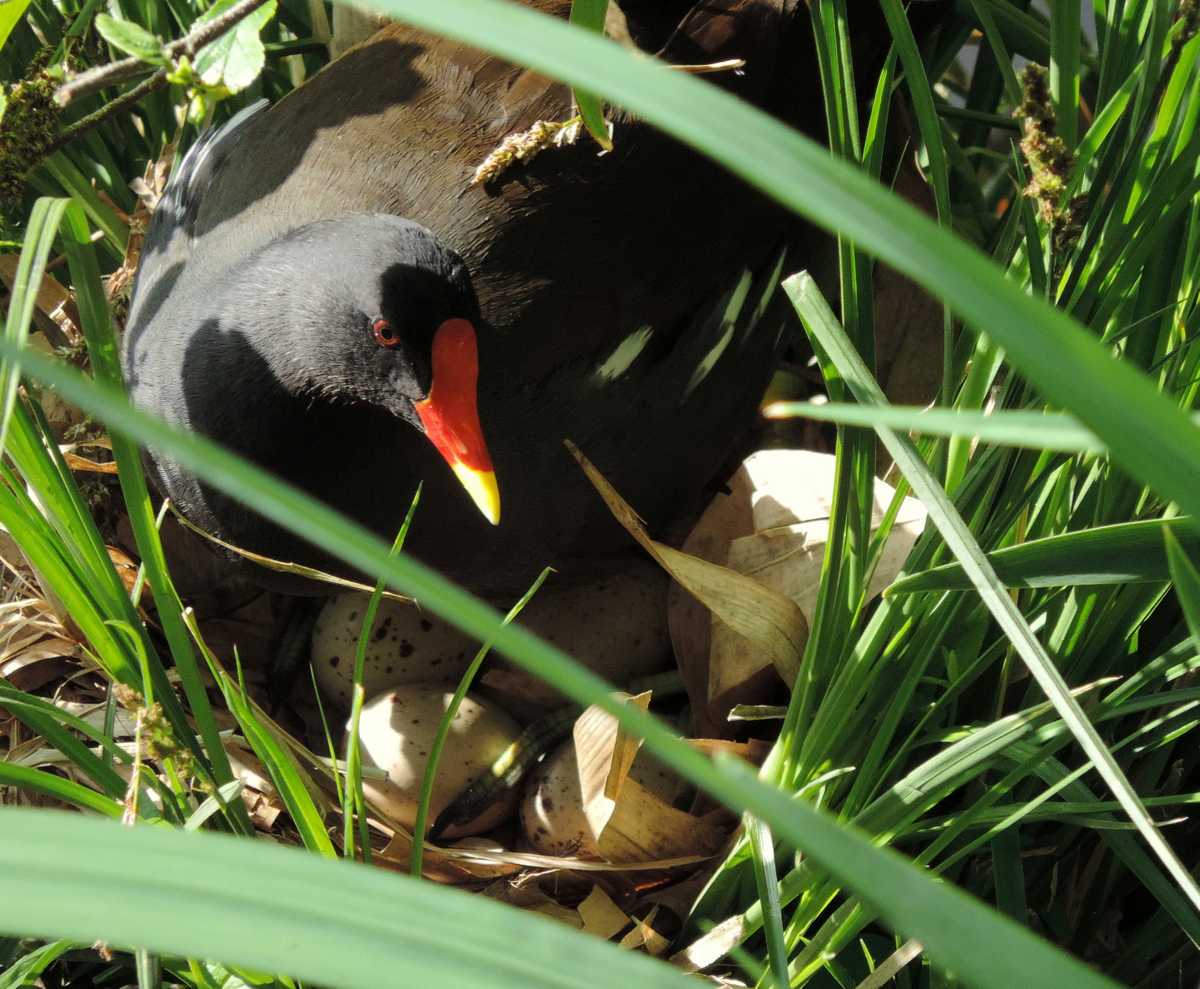
Meanwhile, as of the 14th, the Moorhens were still incubating eggs in front of the boathouse but there was sadly no sign of the eggs or any young the following morning. 
Rowe’s Flashe also remains the best place to see a Grey Wagtail in the arboretum, as there are usually at least two around, although I still haven’t confirmed breeding of this species here this year. I did manage to film this male having a bit of a preen in an Alder by the boathouse though on the 10th.
Always one of the latest summer migrant birds to return to our shores, and now sadly an increasingly uncommon sight in Surrey, it’s always a welcome occasion when one stumbles across a Spotted Flycatcher. I had caught a glimpse of one down in Furze Field on the 4th but thought perhaps that was just a bird passing through on its way further north. Then last week I’d thought I heard one calling in the vicinity of the tearoom but discounted it, but on the morning of the 11th I decided to investigate further and sure enough found this one high up in the Oaks on the front lawn, singing intermittently and living up to its name by sallying back and forth from various perching points and catching flying insects. It was still there as of this morning (15th) although so far no sign of a mate.
On the 15th while carrying out the morning site check I flushed a Cuckoo from long grass along the top path out to Sorbus Hill; only about the third time I've actually seen one here this year. It's good to know they're still around as I haven't been hearing much of the singing male recently. It's likely the pair we saw in Phillimore last month will have bred by now and there could well be a young Cuckoo in a nest already being fed by an unsuspecting host bird somewhere in the arboretum.

Ravens have been seen a couple of times this month - three flew north first thing on the 4th, while on the 9th I managed to get a 'blink and you'll miss it' bit of footage of the one which circled low over the Magnolia Wood area for a short while.
On the 5th I noted two Crossbills flying north over the Badger’s Bowl – the first time I’ve recorded this species here. After a brief intermission since the dispersal of the large flock that wintered at Winkworth the calls of Siskins have become a commonly heard sound again recently and I suspect there may be some breeding somewhere in the vicinity of the Foliage Glade.
Talking of the Foliage Glade, I grabbed this bit of film of one of our wild Honey-bee colonies in a Scot’s Pine in this area of the arboretum the other day. The bees are becoming very active now, particularly the one in the boathouse.
In terms of butterflies we are now into the ‘June Gap’ so there hasn’t been all that many of late, this not helped by the often strong and chilly breeze. Nonetheless it's been good to see a few Small Heaths around in Rowe's Flashe Meadow as well as the first Meadow Browns of the year on the 15th.  
There have been a few nice moths around though, with Small Magpie, Pale Oak Beauty, Straw Dot, Burnet Companion and the migratory Silver Y all seen in the past few days, amongst others.
Small Magpie (Anania hortulata)
Pale Oak Beauty (Hypomecis punctinalis)
Straw Dot (Rivula sericealis)
Silver Y (Autographa gamma)

Dragonflies and damselflies are becoming a more regular sight now, with Beautiful Demoiselle, Broad-bodied Chaser and others seen recently - it was nice to stumble across this pair of Blue-tailed Damselflies in a copulation wheel by Rowe’s Flashe Lake on the 4th.
On the 15th I saw my first Slow-worm of the year, along the Spring Walk - thanks to fellow gardener Giles for spotting this one!
Meanwhile, a Common Toad was seen loitering near the public toilets on the 8th...
On the wild flower front there really is so much to see now so I may do a separate post on that at some point, but very worthy of note here are the Common Spotted Orchids which are really starting to put on a great show all around the arboretum. 
There have been several Stoat sightings in the arboretum recently, generally in the vicinity of Rowe's Flashe Lake. I've not seen one here yet but hope to soon - keep your eyes peeled if you're visiting!

Anyway, that's about it for now, otherwise you'll all be falling asleep. Here's a couple of shots of Buff-tailed Bumblebee on Comfrey to finish. 
                            

*


Monday, 1 June 2015

Wild Winkworth, late May 2015

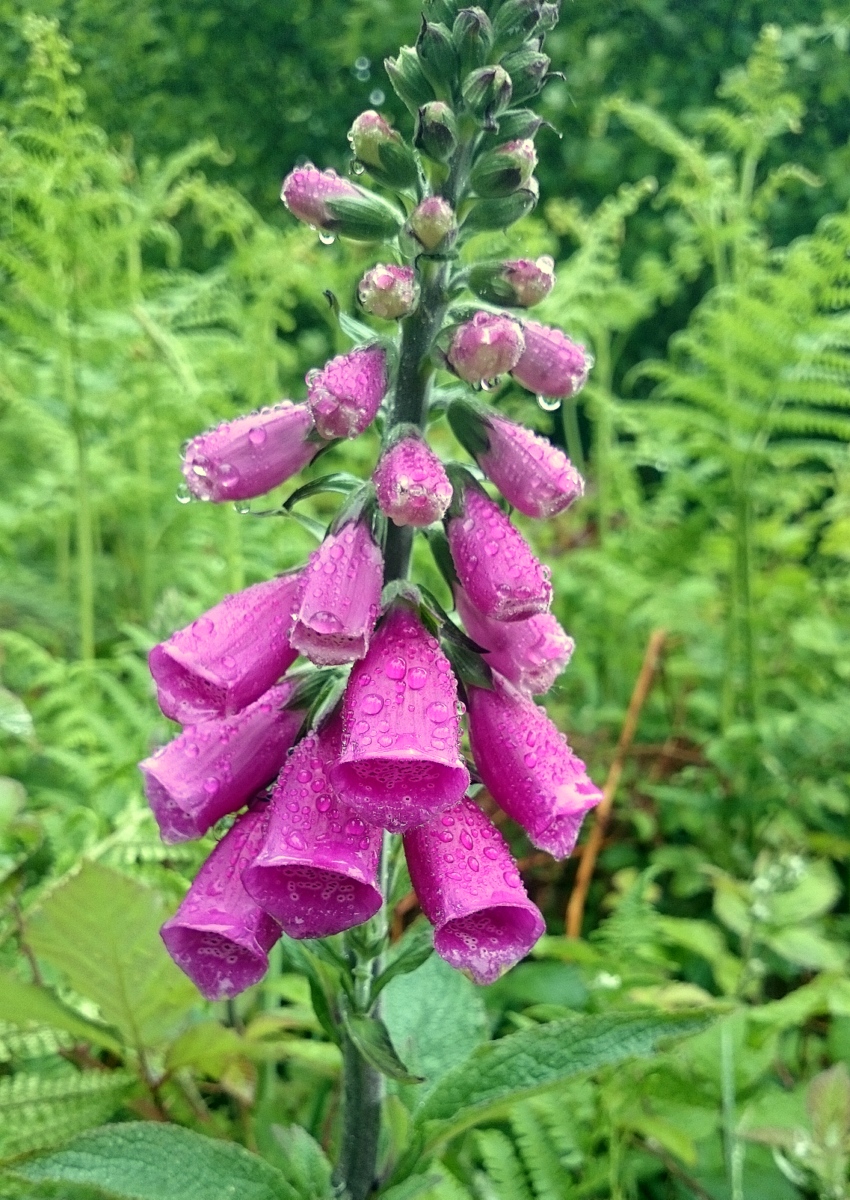
A slightly longer gap between blog posts than usual as I’ve been away for a week on the Outer Hebrides. It was rather chilly up there, as you might imagine, but I gather it’s not exactly been tropical down here in Surrey either! Nonetheless, the arboretum is looking wonderful at the moment, the many vibrant and fresh greens providing the perfect backdrop for the multitude of flowers on the trees and shrubs. The wild flowers too are starting to put on a great show, from the delicate pinks and blues of Vetches and Speedwells to the bright yellows of Irises and Meadow Buttercups and the striking white of Ox-eye Daisies. The Bluebells may be all but over but in the more wooded areas of the arboretum the first Foxgloves are beginning to flower.
There is much new life to be found in the bird population in the arboretum too, Rowe’s Flashe Lake is now teeming with young Mallards, as well as several Canada goslings and a few Mandarin ducklings. This female Mandarin was vigilantly guarding her young on the edge of the meadow on the 30th
Meanwhile Coots and Little Grebes are still on nests towards the southern end of the lake, while Moorhens are nesting right in front of the boathouse balcony, the eggs clearly visible when the adult bird vacates its position.
There are currently at least three active Great Spotted Woodpecker nests around the arboretum – in Bluebell Wood, at the top of the Spring Walk near the Viewing Platform, and by the path that runs between Holly Wood and Magnolia Wood. The latter is the easiest one to find because of its proximity to the path, and on the 26th I captured this brief bit of footage of the female bird bringing food to the noisy nestlings...
Jackdaws, too, are nesting all over the place, with clearly well-grown nestlings calling from various trees holes in Bluebell Wood. Meanwhile, on the slopes below the Owl Bench there are various Blackcap and Chiffchaff nests in the bracken and brambles.
In addition to the ducklings and goslings on the lake, I have started seeing juvenile Robins and Blackbirds around recently, as well as several family groups of Long-tailed Tits. On the morning of the 31st, I stumbled across a female Mallard on the gabions at Rowe’s Flashe Lake with all her ducklings taking shelter from the rain underneath her.
Other highlights from the past couple of weeks have included the first Hobby of the year, over Rowe's Flashe Lake briefly on the 26th and the first dragonfly I've seen here this year, an Emperor, hawking about over the slopes of Sorbus Hill on the 30th.
Another striking insect to look out for is the Scorpion Fly (Panorpa sp.) - there are plenty of them around at the moment, like this one I photographed out on Sorbus Hill on the 30th.
While out strimming and blowing paths with volunteers on the 26th I filmed this Tiger Cranefly (Nephrotoma sp.) ovipositing (egg-laying). I thought it looked a bit like it was on a pogo stick!     
Finally on the 'cool bugs' list for this blog post is the Violet Ground Beetle (Carabus violaceus) I spotted in the Badger's Bowl on the 30th. A common enough species but always nice to see.

*